
Cognitive Behavioral Therapy (CBT)

What Is Cognitive Behavioral Therapy (CBT)?
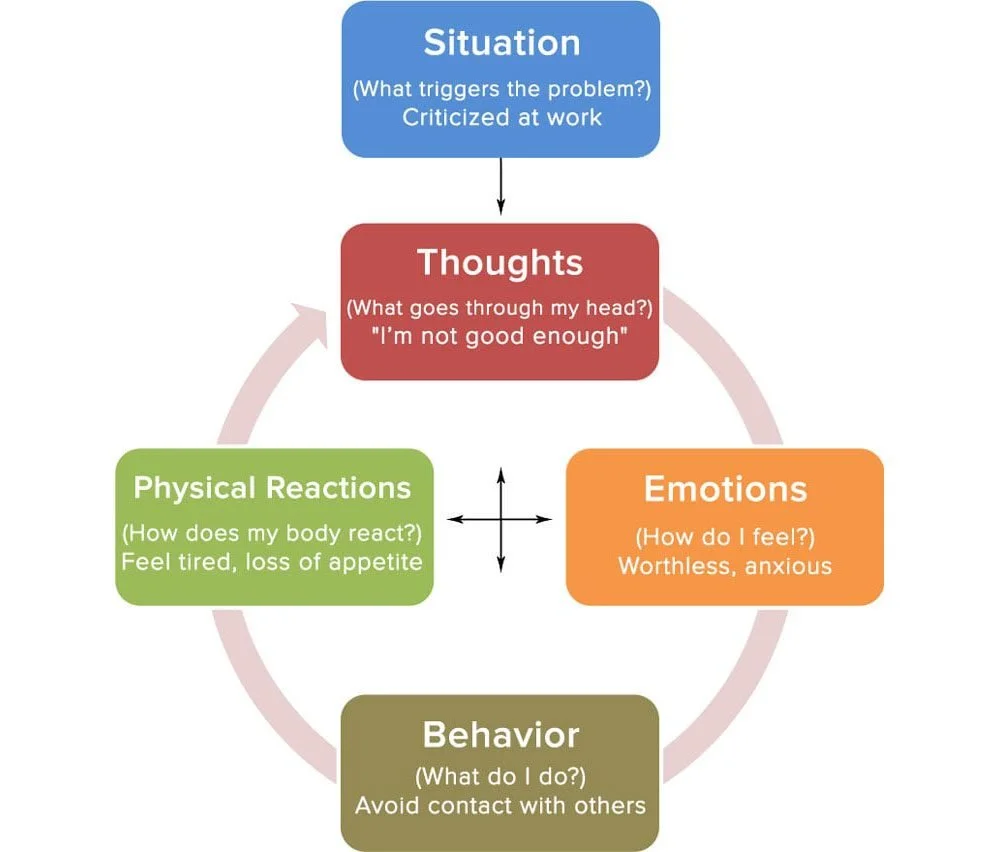
Cognitive Behavioral Therapy (CBT) is an evidence-based, goal-oriented approach to therapy that helps people understand how their thoughts, emotions, and behaviors are connected. CBT focuses on identifying unhelpful patterns and developing practical strategies to create meaningful, lasting change.
CBT is effective for a wide range of concerns and is supported by extensive clinical research.
CBT can help you:
Identify and challenge unhelpful or distorted thought patterns
Reduce anxiety, depression, and emotional distress
Develop healthier coping skills and problem-solving strategies
Change ineffective behaviors that contribute to ongoing difficulties
Gain insight into how thoughts influence emotions and actions
Rather than focusing only on the past, CBT emphasizes practical tools you can use in your daily life to feel more empowered and in control.
CBT is typically short-term and solution-focused, making it an effective option for those seeking practical, research-supported treatment.
If you or someone you know may benefit from Cognitive Behavioral Therapy, please contact us today. We would be happy to discuss how CBT at Foothills CBT may help.
A Structured, Solution-Focused Approach
CBT is more than simply talking about whatever comes to mind during a session. Therapy is structured and collaborative, with clear goals that guide each meeting. Together, you and your therapist will work actively to understand current challenges and practice skills that support progress between sessions.
Through guided self-discovery, CBT helps individuals recognize how maladaptive thinking patterns contribute to emotional suffering and behavioral challenges. By learning to modify these patterns, people can reduce distress, improve emotional regulation, and respond to life’s challenges more effectively.
What CBT Can Help With
Anxiety & Excessive Worry
CBT helps reduce persistent worry, panic, and anxious thoughts by identifying patterns and building practical coping strategies.
Depression & Low Mood
CBT supports individuals in challenging negative thinking, improving emotional balance, and increasing motivation and daily functioning.
Unhelpful Thinking Patterns
CBT helps identify and change distorted thoughts that contribute to emotional distress and ineffective behaviors.
What to Expect in CBT Sessions
CBT sessions are collaborative, active, and goal-focused. From the beginning of therapy, you and your therapist will work together to identify concerns, set clear goals, and develop a personalized treatment plan.
Sessions may include:
Exploring current challenges and thought patterns
Learning how thoughts influence emotions and behaviors
Practicing strategies to challenge unhelpful thinking
Developing new coping skills and behavioral techniques
Applying tools between sessions to reinforce progress
CBT emphasizes learning and practicing skills that promote independence, so individuals feel more confident managing difficulties long after therapy has ended.
Frequently Asked Questions
-
CBT is often considered a relatively short-term, goal-focused therapy, but the length can vary based on your needs and the concerns you’re addressing. Many people attend CBT for 8–20 sessions, while others may benefit from a longer course of treatment depending on symptom severity, life stressors, and therapy goals. Early sessions typically focus on assessment and goal-setting, followed by skill-building and applying strategies in real-life situations. As progress builds, sessions may shift toward strengthening skills, preventing relapse, and maintaining improvements over time.
-
CBT sessions are structured and collaborative. You and your therapist will usually:
Review what’s been happening since the last session
Identify a specific issue to focus on that day (a situation, thought pattern, emotion, or behavior)
Explore how thoughts, emotions, and actions are interacting
Practice CBT tools such as cognitive restructuring, behavioral strategies, or coping skills
Create a plan for applying skills between sessions
CBT is active and practical. The goal is not only insight, but also learning tools you can use outside the therapy room to improve daily functioning and emotional well-being.
-
No. CBT is not about forcing positivity or ignoring real problems. CBT focuses on identifying unhelpful or distorted thinking patterns and replacing them with thoughts that are more accurate, balanced, and helpful. The purpose is to reduce emotional suffering and improve behavior—not to deny challenges. CBT also includes behavioral strategies (not just thinking-focused work), such as exposure techniques, activity scheduling, and skill-building to support real change.
-
Often, yes—CBT commonly includes practice between sessions because change happens through repetition and real-life application. Homework might include:
Tracking thoughts, emotions, or triggers
Practicing coping strategies or relaxation techniques
Challenging unhelpful thoughts using a structured worksheet
Trying a new behavior (for example, gradual exposure to an avoided situation)
Building new habits that support mood and functioning
Homework is always tailored to your comfort level and goals. It’s not meant to feel overwhelming—just practical steps that support progress.